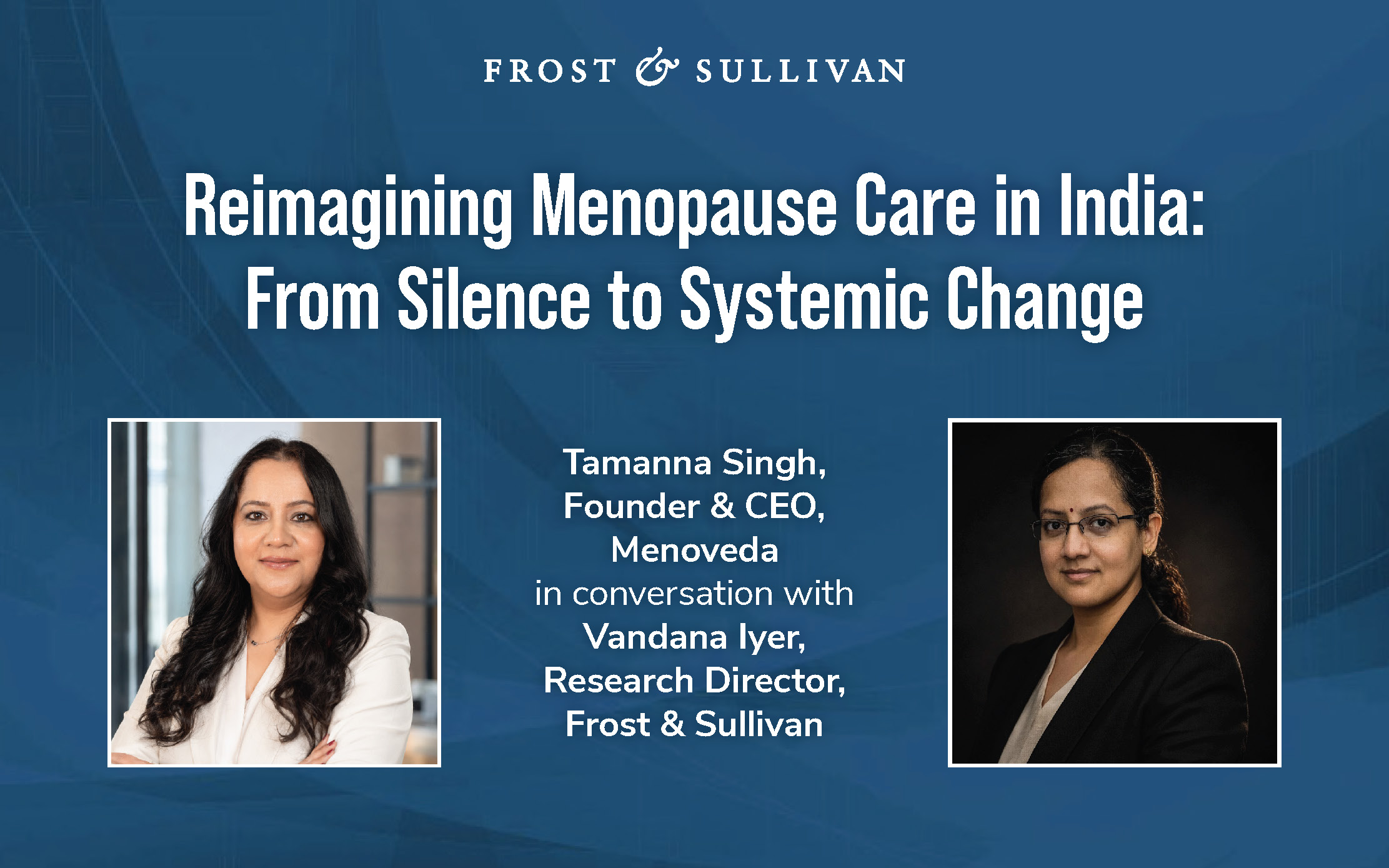
An Interview with Cameron Coursey, Vice President Connected Solutions at AT&T
Download this Transformational Growth Leadership Discussion with Cameron Coursey.
The Internet of Things (IoT) is entering a new phase of transformation. What began as connecting devices is steadily evolving into intelligent, outcome-first ecosystems powered by AI, edge intelligence, automation, and real-time insights. Now, enterprises are under pressure to move beyond pilot initiatives and extract measurable value from connected solutions, where connectivity, data, and intelligence come together to enable more responsive and efficient operations.
In this Transformational Growth Leadership (TGL) conversation, Cameron Coursey, Vice President Connected Solutions at AT&T, speaks with Renato Pasquini, Vice President & Global Program Leader, IoT and Edge at Frost & Sullivan and Cecilia Pérez, Growth Expert & Industry Analyst, IoT at Frost & Sullivan, sharing his expertise from more than three decades in telecommunications and IoT. The discussion sheds light on industry evolution—from basic Machine-to-Machine (M2M) connectivity with physical SIMs to scalable IoT ecosystems powered by embedded SIMs (eSIMs), remote provisioning, and orchestration; alongside the evolution from voice-centric networks to intelligent, globally standardized, cloud-native platforms. In addition, Cameron discusses the role of AI, video analytics, network intelligence, and autonomy in shaping the future of connected solutions.
“From a leadership perspective, the idea is of never resting on your laurels. Don’t be satisfied with where you are today because it’s going to change. And you need to be changing with it. You need to be ready to embrace the new technologies, lead in them, or get left behind.”
— Cameron Coursey, Vice President Connected Solutions at AT&T.
Leading Through Waves of Industry Transformation
Cecilia Pérez: You have more than 35 years of experience in the telecom industry, including 14 years working in IoT at AT&T. What shifts have most fundamentally changed the industry—and how did you lead your teams through those transitions?
Cameron Coursey: I’ve had the opportunity to be part of many of the major transformations that shaped the telecommunications industry and ultimately the evolution of IoT.
- One of the earliest ones was the move from analog cellular to digital cellular. That transition paved the way for data to become more important than voice communications, necessitating a change in devices that work on networks to go digital as well.
- Another change was the adoption of international telecommunications standards and unified protocols through the GSM family, which enabled interoperability across countries and data sessions to work on a global scale.
- Then came the move from handsets to smartphones, which fundamentally changed the dynamics of how people interacted. It was no longer about holding a phone to your head, but about holding a phone to your fingers! The focus shifted to applications, data, digital experiences, and making devices better with over-the-air configurations and security patches.
- From there, the industry evolved into connected devices and the Internet of Things. We began embedding cellular connectivity into vehicles, industrial assets, and machinery, eventually enabling global SIM capabilities that allowed devices to operate seamlessly anywhere in the world using the same SIM card.
- Embedded SIM technology (hardwired SIMs into devices) and remote SIM management further accelerated IoT adoption by making connectivity more resilient, secure, and scalable.
- Today, it is all about using the data generated by connected devices for machine learning (ML) and artificial intelligence (AI).
From a leadership perspective, the key lesson has always been to never become complacent. Technology changes constantly, and organizations need to evolve with it. Leaders have to embrace emerging technologies early, help their teams adapt, and continuously prepare for what comes next.
Leadership, Collaboration, Growth Challenges, and Innovation
Renato Pasquini: Reflecting on your journey at AT&T, which experiences most influenced how you lead teams, manage innovation, and take calculated risks?
Cameron Coursey: AT&T has a great program to get the leadership in a good place. It’s called “Leading with Distinction.” A key principle of this is understanding that you do not need to be the best at everything. Instead, effective leadership comes from knowing your strengths, recognizing where others are stronger, and building collaborative networks around that expertise.
That mindset has been central to my career. I’ve had expertise in areas like devices, radio technology, and cellular networks, but I’ve also relied heavily on experts in billing systems, operations, and other areas. Leadership is not about how much the leader individually knows, but about how much the team collectively knows and how effectively people collaborate together.
Another important lesson has been learning how to lead through obstacles and adversity. Obstacles should not be viewed just as barriers one must tackle, but as new opportunities to improve, adapt, and become stronger. Every challenge presents an opportunity to learn something new.
I also strongly believe in having a growth mindset and not being stuck in the old ways of doing things. Leaders need to constantly search for better ways of doing things rather than remaining tied to legacy approaches. Finally, servant leadership is critical—serving and helping your teams remove obstacles, providing clarity and direction, and enabling people to accomplish great things.
Renato Pasquini: How do you manage innovation or incorporate new ideas into the workflow?
Cameron Coursey: We have focused on taking things that were either on the horizon or already working elsewhere and applying them to current situations. For example, in the connected car space, we led by delivering 4G LTE capability early, leveraging our smartphone experience for IoT. It’s really about understanding where things are headed, reusing capabilities like device certification and SIM approaches, simplifying them, and applying what you know to new areas.
Download this Transformational Growth Leadership Discussion with Cameron Coursey.
Turning Technology into Measurable Business Outcomes
Cecilia Pérez: In a recent blog, you discussed the industry’s shift from “connected devices” to “intelligent outcomes.” What mindset changes are required to move organizations from building impressive technology to consistently delivering customer value?
Cameron Coursey: The most important shift is learning to see the world through the customers’ eyes. Customers do not care about technology for its own sake—they care about what that technology enables them to accomplish.
That means organizations must focus more on solving meaningful customer problems through technology. One approach we have taken is bringing technologists much closer to customers and sales teams so they can directly hear feedback and understand whether the solution they are developing has hit the mark with the customer or failed.
That direct connection is also highly motivating for engineering teams. When technologists can clearly see how their work is improving customer operations or solving a real-world problem, it reinforces purpose and accelerates innovation.
Equally important is maintaining a relentless focus on measurable outcomes. Results have to be continuously measured and evaluated to ensure the technology is actually delivering business value.
Building Vertical-specific Expertise Without Losing Cross-functional Collaboration
Renato Pasquini: How do you structure teams to balance deep specialization and verticalization with cross-functional collaboration across a broad IoT ecosystem?
Cameron Coursey: IoT is an extremely broad domain, so specialization is necessary. We organize teams with deep expertise in areas such as devices and SIM technology, network infrastructure, and IT systems. We also have system architecture teams that oversee end-to-end system design across the broader ecosystem.
On the product realization side, we also organize teams around vertical markets such as connected vehicles and Industrial IoT. While specialization is important, the critical factor is ensuring that all teams remain connected and collaborate closely.
For example, if we develop an over-the-air firmware update for connected vehicles, we want that capability to be reusable in Industrial IoT environments as well. That cross-functional learning and reuse of capabilities is essential for scaling innovation efficiently.
Strategies for Earning Trust in Mission-critical IoT
Renato Pasquini: You’ve emphasized that IoT leadership is about earning trust. How has that principle shaped the way you guide product innovation and customer relationships, particularly in mission-critical applications like connected vehicles?
Cameron Coursey: Trust is built by facing challenges directly and being transparent with customers. If operational issues arise, you address them head on rather than making excuses, assigning blame, or pointing fingers. Customers want providers who are willing to work collaboratively to solve problems.
Another important principle is delivering difficult news early and being transparent throughout the process. Customers value honesty and clarity, especially in mission-critical environments. We also emphasize staying very close to customers—both organizationally and geographically. Having dedicated people who work closely with customers every day creates stronger alignment and faster issue resolution.
Ultimately, trust comes down to execution. Nothing, nothing creates trust more than delivering what you’ve promised to the customer.
Helping Enterprises Scale Beyond IoT Pilots
Cecilia Pérez: Many enterprises struggle to move IoT initiatives beyond pilot programs. From your experience, what typically holds organizations back, and how does AT&T design platforms to help customers scale?
Cameron Coursey: There are two areas that we’ve seen customers struggle:
- One of the biggest challenges is that organizations fail to see sufficient value from IoT investments. In many cases, the issue is not the technology itself, but how the pilot was structured and whether it was aligned with the outcomes the customer actually needed. That’s why we often take a consultative approach and work alongside customers to help design solutions that generate measurable value. Many enterprises are experts in their own industries, but not necessarily in cellular connectivity or IoT architectures, so part of our role is helping guide them through that process with IoT Consulting.
- The second challenge is security. Organizations are often hesitant to connect critical assets because of cybersecurity concerns. We work closely with customers early in the process to help them understand how connected solutions can be implemented securely, including encryption and layered security approaches that help protect customer data and operations.
Download this Transformational Growth Leadership Discussion with Cameron Coursey.
Driving Growth Through Technical Expertise and Execution
Renato Pasquini: AT&T has seen strong growth in connected cars and Industrial IoT. What innovation or execution decisions enabled that growth?
Cameron Coursey: A great deal of it comes down to patience and incubation. Building trust and long-term relationships in industries like automotive takes years. Success in one customer engagement creates credibility and momentum for future opportunities. You might start with a customer that you do a great job with and there’s always word of mouth on the street.
Maintaining deep technical expertise has also been critical. Customers want partners who can consistently execute and remain at the forefront of innovation. Finally, growth comes from delivering solutions that clearly demonstrate value to customers and solve meaningful operational problems.
Leveraging Network Intelligence for AI-driven IoT
Cecilia Pérez: As AI becomes more distributed and embedded closer to operations, how is AT&T leveraging network-driven intelligence to help customers manage data, security, and performance at scale?
Cameron Coursey: We recently introduced a solution called IoT Network Intelligence, which provides customers with real-time visibility into how their connected devices are performing across the network.
The platform combines network performance metrics from a radio standpoint—like latency, throughput, signal strength, and uplink/downlink performance—with device-level data to provide actionable operational insights through dashboards and APIs.
We’re also integrating Mobile Threat and Anomaly Detection capabilities that help pinpoint configuration issues, detect anomalies, and potentially identify compromised devices in near real time. Importantly, we are very careful about customer privacy and data ownership. The customer’s data remains their data, and we focus on enabling insights while respecting those boundaries.
The Power of Ecosystem Collaboration
Renato Pasquini: Success in IoT increasingly depends on orchestrating ecosystems rather than deploying isolated technologies. How has this changed the way you make strategic decisions?
Cameron Coursey: One of the most important realizations is understanding that you can’t be all things to all people. You are one part of the equation. Delivering successful IoT solutions to the customer requires deep collaboration across a complex ecosystem of technology providers.
For example, when you’re providing connectivity to any kind of device or even IoT Network Intelligence, it requires coordination across SIM vendors, chipset providers, module manufacturers, device companies, network infrastructure providers, radio access and core network providers, cloud platforms, and application providers—all from multiple layers of the protocol stack.
All these players must work together seamlessly to deliver secure, scalable, end-to-end customer solutions. Strategic leadership today increasingly involves orchestrating these relationships effectively rather than trying to own every part of the technology stack.
Download this Transformational Growth Leadership Discussion with Cameron Coursey.
Next Growth Frontiers: Video Intelligence, Autonomous Vehicles, and Smart Manufacturing
Cecilia Pérez: Looking ahead three to five years, where do you see the biggest growth opportunities for AT&T Connected Solutions, and what customer problems are you most excited to solve next?
Cameron Coursey: One major opportunity is what we call “video as a sensor.” By combining video analytics with AI inference models, organizations can replace many traditional sensors and create highly intelligent monitoring environments. This has major applications in security, asset monitoring, and public infrastructure, where real-time video intelligence can better detect anomalies, identify risks, and trigger immediate responses. Moreover, video security concerns not only enterprise customers, but also, general public, states, and government entities.
Another important area is autonomous and software-defined vehicles and robotics. These vehicles generate more data and require continuous connectivity to support AI model training, remote diagnostics, and over-the-air updates. An example application would be if a vehicle gets stuck where it needs help, then teleoperations and real-time video can drive that vehicle out of said area with human assistance.
Manufacturing is also becoming increasingly important as industries push toward more localized and automated production environments. Connectivity, AI models, and intelligent manufacturing systems can help organizations optimize machinery performance, improve operational efficiency, and proactively identify issues across facilities. Our Connected AI for Manufacturing proactively fixes problems in one factory, with the ability to apply similar solutions to another manufacturing plant if the need arises.
Closing Reflections: Balancing Technical Depth with Business Leadership
Renato Pasquini: What advice would you give organizations trying to balance deep technical expertise with strategic business leadership? How can companies grow, innovate, and differentiate?
Cameron Coursey: Leaders need to have a strong grasp of both technology and business. Technical leaders must understand enough about business priorities to ensure the innovations they pursue are meaningful for customers and aligned with broader organizational goals.
Equally important is social intelligence. Leaders need to understand how they communicate, when to listen, when to speak, when to step out of comfort zones, and how to build strong teams. No leader can succeed alone—the strength of the team ultimately determines success.
Change is happening fast, so every leader needs a “North Star”—to stay grounded in a volatile, uncertain, complex, and ambiguous world. At the same time, a mindset for rapid change, guided by strong networks, is critical to decide what direction to take next. That balance between stability and agility will become increasingly important in the years ahead.
About Renato Pasquini
Renato is the Research Vice President & Global Program Leader for IoT and Edge at Frost & Sullivan. He has been working for +23 years with consulting and research in the information and communication technologies (ICT) sector and is currently research vice president at Frost & Sullivan. He also serves as an advisor to organizations and associations in the Americas. Pasquini holds a bachelor’s degree and an MBA in business administration from EAESP-FGV in Brazil, and a master’s degree in ICT Business from Universitat Politècnica de Catalunya in Spain.
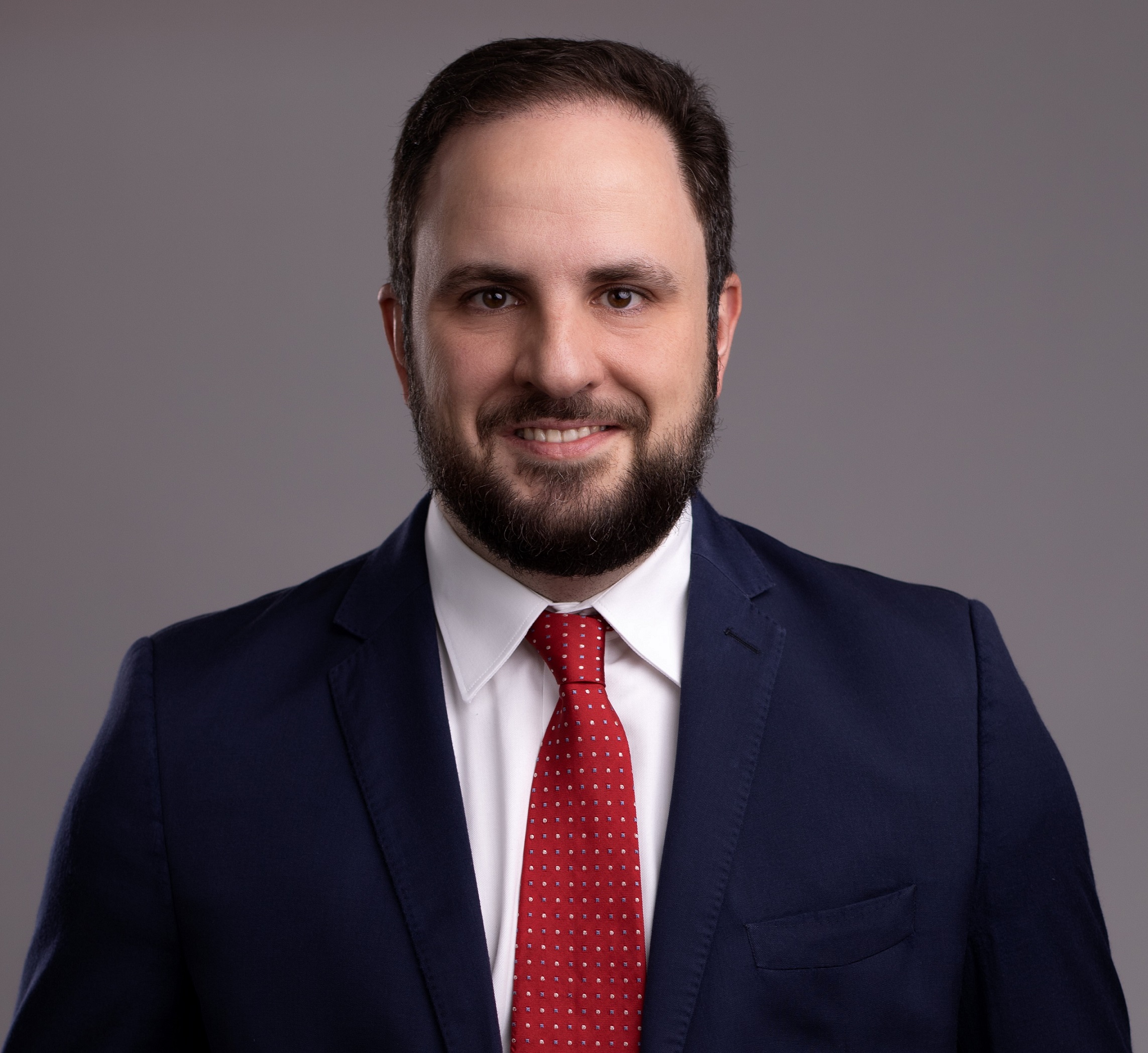
Cameron is the Vice President of Connected Solutions at AT&T. He is a technology and innovation leader in the Internet of Things, including connected cars, Industrial IoT, smart cities, asset tracking and monitoring, autonomous vehicles, drones, and wearables. Cameron also has extensive experience in wireless technologies, devices, networks, platforms, software as a service, product development, product management, operations, and technology strategy.

About Cameron Coursey

About Cecilia Pérez
Cecilia is a Growth Expert & Industry Analyst at Frost & Sullivan. She specializes in the Internet of Things (IoT) within the ICT sector. With +5 years of research and consulting experience, she produces global market studies covering areas such as eSIM, IoT platforms, LPWAN, Cellular IoT, NTNs, MEC, and IoT hardware. Cecilia holds a BA in International Relations from Universidad Católica Argentina (UCA) and an MA in International Studies from Universidad Torcuato Di Tella (UTDT).
Ready to Lead the Transformation?
Frost & Sullivan’s Transformational Growth Leadership program provides the intelligence, best practices, growth opportunities, and expertise organizations need to thrive through the evolution of IoT and Edge solutions.
-
- Book a Growth Dialog:Align your organization’s IoT strategy with Frost & Sullivan’s Growth Pipeline™ Dialog.
- Engage with Growth Experts:Co-design AI-enabled, data-driven IoT tools and platforms that help scale industry-specific and commercial impact.
- Share Your Transformation Story: Position your organization as a transformation leader in IoT and Edge Solutions through Frost & Sullivan’s Transformational Growth Leadership program.
- Join the Growth Council:Collaborate with cross-industry leaders shaping the future of ICT ecosystems.
- Nominate for Best Practices Recognition:Be recognized for excellence in IoT connectivity, mobile platforms, innovative IoT solutions, and customer impact.
- See Your Competitive Positioning on the Frost Radar™:Benchmark your growth performance and innovation strengths against your top competitors.
- Activate Brand & Demand Growth:Accelerate awareness, engagement, and revenue growth through integrated brand and demand generation strategies.
Appendix
Frost & Sullivan is fully equipped with actionable intelligence that helps business leaders drive differentiation and innovation in the IoT and Edge business solutions landscape. Our expertise spans transformative megatrends, AI disruption, changing customer expectations, and new business models. We equip ecosystem players to capitalize on latest opportunities through competitive benchmarking, growth forecasts, risk mitigation frameworks, and best-practice guidance.
To know more about growth opportunities, megatrends, companies to action, and best practices in IoT connectivity platforms, cellular and mobile IoT, and IoT services view our latest portfolio of growth analyses on the subject:
- Frost Radar™: IoT Remote SIM Provisioning, 2026
- Inside the Minds of IoT Decision-Makers: Spending Priorities and Growth Opportunities
- Frost Radar™: Mobile IoT Connectivity Management Platforms
- The Future of Multi-Access Edge Computing: Decision-Makers’ Spending Priorities and Growth Opportunities, 2026