Martin Heinz, CEO, iTAC Software AG, in conversation with Kamal Shah, Associate Partner, Frost & Sullivan, and Chandni Hussain, Industry Analyst, Frost & Sullivan
Download this Transformational Growth Leadership Discussion with Martin Heinz
The manufacturing sector is navigating an increasingly complex and uncertain global environment shaped by geopolitical disruptions, supply chain shifts, and evolving customer demands. At the same time, enterprises are accelerating investments in digital transformation, seeking greater transparency, efficiency, and control across distributed production networks.
In this Transformational Growth Leadership discussion, Martin Heinz, CEO of iTAC Software AG, shares how iTAC is addressing these challenges through a unified strategy that combines modular MES (Manufacturing Execution Systems)/MOM (Manufacturing Operations Management) platforms, AI-driven capabilities, and digital twin integration. He explains how the company’s group structure, product standardization, and market-focused approach are enabling it to serve diverse industries while maintaining scalability and adaptability.
“We cannot close our eyes to market changes, we have to understand, adapt, and reflect them in our strategy.”
— Martin Heinz, CEO, iTAC Software AG
Building a Unified Strategy Across Markets and Capabilities
Kamal Shah: Given today’s geopolitical uncertainty and shifting industrial landscape, how does iTAC approach strategy and collaboration with global customers?
Martin Heinz: At the core, everything starts with strategy. At iTAC, we operate not just as a single company but as part of the iTAC Group, which includes three additional companies, DUALIS in Germany, Cogiscan in Canada, and Accevo in Poland. Each of these brings complementary capabilities, from production scheduling and simulation to connectivity and process manufacturing.
By combining these capabilities, we can address a wide range of manufacturing requirements, from discrete production to process-oriented environments. This gives us a comprehensive portfolio that supports different industries and use cases.
Our strategy is clearly defined at the board level and broken down into specific markets and regions we want to address. We assess each market in terms of potential, entry feasibility, and the value we can deliver through our product portfolio. Based on that, we define short-, mid-, and long-term plans and translate them into actions across divisions.
Delivering Industry-agnostic MES Through Standardization
Kamal Shah: You work with customers across automotive, industrial, and medical sectors. How do you tailor your approach to such diverse industries?
Martin Heinz: What is important for us is that we do not build separate solutions for each industry. Instead, we provide a standardized MES/MOM platform that can be configured based on customer requirements without programming.
For example, automotive customers require strong capabilities in production control, interlocking, quality assurance, and transparency across global plants. These same capabilities are also relevant in industries like medical devices, where traceability, documentation, and compliance are critical.
Rather than developing different systems, we use the same core platform and configure it for each use case. This approach allows us to serve multiple industries efficiently while maintaining consistency and scalability.
Enabling Global Manufacturing Connectivity
Kamal Shah: How does iTAC support globally distributed manufacturing environments?
Martin Heinz: Many of our customers operate across multiple plants worldwide. Our system enables seamless connectivity between these plants.
For example, if one plant produces a component or semi-finished product that is then used in another plant for further production, our platform ensures that all processes are connected and synchronized and all needed data are available in a cross-plant-scenario. Customers also use this solution to integrate their external supply chain into their own ecosystem, which means that suppliers’ production processes can also be integrated in this way, enabling customers to ensure comprehensive data integrity and data security.
This creates transparency across the entire value chain and allows companies to manage production more effectively on a global scale.
Meeting Regulatory Demands in MedTech and Pharma
Chandni Hussain: How does your platform address strict regulatory requirements in medical and pharmaceutical industries?
Martin Heinz: From a functional perspective, many of the requirements in medical and pharma are similar to those in automotive, particularly around traceability, documentation, and quality control.
We support these requirements through standard functionalities within our platform. In addition, we provide validation services and rely on certifications such as FDA 21 CFR Part 11, ISO 9000, ISO 27001, and TISAX to ensure compliance with industry standards and in addition, we comply with GMP (Good Manufacturing Practice) guidelines, which require quality assurance throughout the entire production process.
With the integration of Accevo’s capabilities, we are now also able to support process industries like pharma, combining discrete and process manufacturing on a common platform.
Flexible Deployment: Cloud, On-premise, and Hybrid
Chandni Hussain: How do you approach cloud versus on-premises deployment, especially in regulated industries?
Martin Heinz: The choice between cloud and on-premise is largely driven by customer requirements. Few customers prefer cloud-based solutions, while others still rely on on-premises systems.
From our perspective, we support both models, as well as hybrid approaches that combine edge processing with cloud capabilities. We can deploy solutions in commercial clouds, private clouds, or on-premises environments.
Importantly, we do not position ourselves as a SaaS (Software-as-a-Service) provider. Instead, we deploy systems within the customer’s infrastructure, ensuring flexibility while maintaining control over data and processes.
AI as a Core Enabler of Manufacturing Intelligence
Kamal Shah: How do you see AI shaping your platform and the broader MES landscape?
Martin Heinz: AI is a critical focus area for us. We have already integrated large language model capabilities into our platform, enabling chatbot functionality that allows users to access data and insights more easily.
Beyond that, we are combining AI with data analytics to develop predictive solutions. This will fundamentally change how manufacturing systems operate.
In the future, we expect AI to evolve further into generative AI and agent-based systems, where different agents interact within the system to automate processes and decision-making. All vendors in the MES/MOM space will need to adapt to these developments.
Adapting to Global Competition and Market Dynamics
Kamal Shah: How do you view competition from emerging markets such as China and India?
Martin Heinz: We do not see this as a threat but as a reality we must adapt to. We already have a team in China and actively integrate developments from that region into our portfolio.
It is essential to understand how quickly markets like China adopt new technologies and adapt accordingly. We cannot ignore these dynamics, we must incorporate them into our strategy.
Strategic Growth Through Targeted Acquisitions
Kamal Shah: How does M&A fit into your growth strategy?
Martin Heinz: M&A plays a role when we identify gaps in our portfolio. If a required capability is not available internally, we evaluate whether to build it or acquire it.
For example, acquiring DUALIS allowed us to bring in advanced planning and scheduling (APS) capabilities that would have taken years to develop internally.
However, our approach is not to absorb and dissolve companies. We preserve their strengths, integrate their capabilities into our portfolio, and allow them to continue operating independently. This creates value both at the group level and for each individual company.
Navigating Uncertainty in a Volatile Global Environment
Chandni Hussain: What are the biggest challenges you are currently facing?
Martin Heinz: The biggest challenge is the unpredictability of the global economic environment. We are dealing with continuous disruptions, from trade tensions to geopolitical conflicts.
This affects our customers directly and requires us to adapt our strategy continuously. We review and adjust our plans on a quarterly basis while maintaining our overall financial targets.
The ability to adapt quickly to changing conditions is a key success factor in today’s environment.
Scaling Digital Twin Capabilities Across Manufacturing
Chandni Hussain: How do you see digital twin evolving within your portfolio?
Martin Heinz: Digital twin is becoming increasingly important. In the past, customers focused on modeling individual production lines or stations. Today, they are looking to create digital twins of entire manufacturing environments.
This includes multiple plants and the ability to optimize production across locations. With DUALIS, we have strong capabilities in simulation of production processes and digital twin, which we are integrating into our broader platform.
We see digital twin as a critical component of future manufacturing systems.
Closing Reflection: Building Adaptive, Intelligent Manufacturing Systems
As manufacturing environments grow more complex and interconnected, the need for integrated, flexible, and intelligent systems becomes increasingly critical. Organizations must balance standardization with adaptability, enabling them to respond to shifting market dynamics while maintaining operational efficiency.
iTAC’s approach reflects this evolution. By combining a standardized MES/MOM platform with configurable deployment, AI-driven capabilities, and digital twin integration, the company is positioning itself to support a wide range of industries and use cases. Its group structure and targeted acquisition strategy further enhance its ability to expand capabilities while preserving agility.
In an era defined by uncertainty and rapid technological change, success will depend on how effectively organizations can integrate systems, leverage data, and adapt to evolving market conditions. iTAC’s strategy highlights the importance of building manufacturing ecosystems that are not only connected, but also resilient and future-ready.
About Martin Heinz
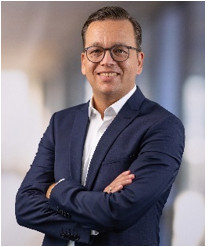
Martin Heinz is the Chief Executive Officer of iTAC Software AG, a position he assumed in January 2025, after serving on the company’s Executive Board since 2020. He holds a degree in industrial engineering and an Executive MBA from THM Business School.
He joined iTAC in 2003 and has held several leadership roles, including Vice President of Product Management and Vice President of Operations. As General Manager, he led the growth of the D-A-CH business unit and continues to play a key role in shaping iTAC’s strategic direction.
Martin also serves on the management board of DUALIS GmbH IT Solution and actively contributes to industry initiatives focused on MES, traceability, and Industry 4.0.
Kamal Shah is an Associate Partner and Head of the DACH Region at Frost & Sullivan, based in Frankfurt, Germany. He brings over 30 years of experience in strategic growth, market expansion, and business development across global industries.
At Frost & Sullivan, he leads strategic initiatives across Europe, with a focus on enabling market entry and growth strategies. He has previously held leadership roles at Frost & Sullivan, ThyssenKrupp Elevators, and Daimler, driving international market development and product launches.

About Kamal Shah

About Chandni Hussain
Chandni Hussain is an Industry Analyst at Frost & Sullivan, specializing in Healthcare & Life Sciences. With over eight years of experience, she focuses on clinical diagnostics, precision medicine, and emerging healthcare technologies.
Her expertise includes market intelligence, forecasting, competitive analysis, and growth opportunity identification across areas such as molecular diagnostics, oncology biomarkers, and genetic testing. She holds a master’s degree in applied chemistry and a bachelor’s degree in industrial chemistry.
Ready to Lead the Transformation?
- Book a Growth Strategy Session: Align your growth roadmap with Frost & Sullivan’s Visionary Growth Pipeline™ Dialog.
- Engage with Growth Experts: Co-design AI-enabled, data-driven operating models that scale industry-specific and commercial impact.
- Share Your Transformation Story: Position your organization as a transformation leader through Frost & Sullivan’s Transformational Growth Leadership platform.
- Join the Growth Council: Collaborate with industry leaders shaping the future of your ecosystem.
- Nominate for the Best Practices Recognition: Be recognized for excellence in growth strategy, execution, and customer impact.
- Demonstrate Industry Positioning on the Frost Radar™: Benchmark your growth performance and innovation strength against industry competitors.
- Activate Brand & Demand Growth: Accelerate awareness, engagement, and revenue growth through integrated brand and demand generation strategies.
Annexure: Enabling Intelligent and Connected Manufacturing Ecosystems
As manufacturing organizations navigate increasing complexity and global uncertainty, there is a growing shift toward integrated MES/MOM platforms, AI-driven analytics, and digital twin-enabled operations. These capabilities are enabling greater transparency, predictive decision-making, and optimization across distributed production environments.
To support industry leaders in this transformation, Frost & Sullivan provides forward-looking intelligence across smart manufacturing, industrial AI, and digital operations, including:
📌 Enterprise Metaverse: Building Digital Twins and Virtual Collaboration Platforms
📌 The Future of Process Automation
📌 Growth Opportunities in Global Open Automation
📌 Technological Advances in Edge AI Transforming Industry 4.0
📌Technological Advancements in Advanced Robotics and Autonomous Systems Transforming Industry 4.0
These analyses reinforce the key themes of this discussion, integrated platforms, AI adoption, and digital twin innovation, offering a strategic roadmap for organizations building next-generation manufacturing ecosystems.