Kempton Presley, Chief Executive Officer, AdhereHealth, in conversation with Nitin Naik, Associate Partner & Global Practice Area Leader, Healthcare & Life Sciences, Frost & Sullivan
Download this Transformational Growth Leadership Discussion with Kempton Presley
Healthcare is becoming increasingly complex. Demographic shifts are changing the needs of vulnerable populations, regulatory changes continue to influence healthcare behaviors and incentives, and technology and artificial intelligence (AI) are creating new possibilities for how care is delivered. For organizations operating across medication adherence and population health, navigating these forces requires more than technology alone. It requires a deeper understanding of people, clinical realities, data, and the healthcare ecosystem.
For Kempton Presley, his role at AdhereHealth brings together several disciplines that have shaped his career, including economics, public health, and medical informatics. Having spent more than 20 years primarily on the payer side of healthcare, he sees an opportunity to use data-driven strategies and technology-enabled services to support members, clients, employees, and the broader healthcare system.
At the center of AdhereHealth’s approach is the ability to connect with patients, providers, pharmacies, and care teams through multiple channels and determine which combination works best for each individual. As healthcare organizations contend with labor shortages, increasingly complex patient journeys, and changing expectations around value-based care, Kempton believes technology and AI can help bridge the gap between the demand for quality care and the available supply, provided they are deployed thoughtfully and continue to preserve the human connection at the heart of healthcare.
“We have to be very careful about where we overlay technology and how we ensure the human aspect of program design remains intact.”
—Kempton Presley, CEO, AdhereHealth
Three Forces Reshaping Medication Adherence and Population Health
Nitin Naik: You operate at the intersection of behavioral science, clinical expertise, technology, and patient engagement. When you look at the medication adherence and population health landscape today, what are the forces that are having the greatest impact?
Kempton Presley: There are three major forces shaping our world. The first is demographic change. We support some of the most vulnerable populations, including seniors, Medicare Advantage members, Medicaid members, and people receiving different types of subsidies. At the same time, there is continued complexity in each person’s healthcare journey. That complexity is psychosocial, socioeconomic, and clinical. We have to understand all of those dimensions when we are trying to influence behavior and improve outcomes.
The second force is the regulatory and government environment. Healthcare is heavily influenced by government policy, and there is continuous change at both the federal and state levels. Those changes create incentives and penalties for different health behaviors, so we have to stay on top of what is happening across the regulatory landscape.
The third is technology and AI. There is so much evolution happening in how information is exchanged, how data is mined, and how humans can be augmented through different capabilities. Keeping up with all three forces is a full-time job, and it certainly doesn’t allow for a dull moment.
Using Technology to Bridge the Healthcare Supply-demand Gap
Nitin Naik: Of those three forces, which do you think will have the greatest impact on health plans and providers over the next five years?
Kempton Presley: It would be a fallacy to say that these forces are mutually exclusive, but the technology and innovation aspect has significant promise and responsibility.
We have incredible amounts of data, and there is an opportunity to use that data more effectively to understand how populations shift, how people connect and engage with the healthcare system, and how their behaviors change. At the same time, there are labor shortages throughout healthcare. In many areas, there is more demand for certain services than there is supply of quality care.
If we approach technology and AI responsibly, there is an opportunity to bridge that gap between supply and demand. Technology can augment what humans do and allow clinical delivery to have greater reach. For me, that responsible use of new capabilities is likely to have the greatest impact.
Building a Formula That Adapts to the Individual
Nitin Naik: Looking toward 2030, where do you see the biggest growth opportunities for AdhereHealth?
Kempton Presley: We have a set of capabilities built around using data and information to connect with different members of the population and their care teams. Those capabilities can apply to any risk-bearing entity, including different types of payers and risk-taking providers.
We have a formula that allows us to connect with people in ways that align with their propensities and give them the information and guidance they need to do difficult things. That might mean staying consistent with their medications, thinking through side effects, addressing concerns about medication efficacy, or identifying blind spots in their treatment plans.
Today, we primarily work across Medicare Advantage, Medicaid, and some commercial plans. Looking toward 2030, we see significant adjacencies across the healthcare landscape where these capabilities can be applied.
Nitin Naik: You called that a “formula.” How do you see it evolving as you grow, particularly as you deepen your relationships with clients?
Kempton Presley: I would love to figure out the magic rubric you mentioned. But for us, the goal is to be innovation partners with our clients and with the market.
We listen to the market and to where needs are emerging. That has helped us evolve our product roadmap and identify which programs are in highest demand while still aligning with our core capabilities.
And that formula is never going to be completely finished. We are constantly evolving it. One person may prefer to engage with the healthcare system digitally. Someone else may respond better to an SMS reminder. We may need to communicate with a doctor through the EHR, or we may need to call the patient at the end of their journey to understand what is happening.
Today, we can build these recipes at a population or cohort level. The more specific we can become based on an individual’s needs, data, and preferences, the closer we get to the formula that can drive the greatest impact.
Listening Without Losing Strategic Focus
Nitin Naik: Listening to customers clearly plays an important role in that evolution. But with so much feedback and so many possible opportunities, how do you make sure the roadmap stays focused?
Kempton Presley: For us, it is about understanding what is most important and not allowing distractions to crowd out the best priorities. That requires constant communication and frequent assessment of what matters most at any given time because there are many opportunities pulling at all of us.
I had a colleague years ago who always said, “feedback is a gift.” Feedback doesn’t always feel good, and it may sometimes seem at odds with our mission that day or that week. But we need the right mechanisms and the right confidence to bring that feedback in and process it in the right places.
The goal isn’t to let feedback derail us. It is to use it to reinforce the models we are building. That magic rubric depends on inputs from our constituents. We need to harness that feedback, allow it to augment the work we are doing, and use it to build wisdom as we strengthen the roadmap.
Experience as a Competitive Advantage
Nitin Naik: There are many organizations investing in technology, analytics, and care management. What do you believe differentiates AdhereHealth in the market?
Kempton Presley: One of our advantages is the growing complexity of the market combined with several decades of experience in this particular subdomain.
That institutional knowledge across our teams and the systems we have built around it gives us strength. It allows us to distinguish where the market is actually going from the false alarms and noise we have seen in the past.
There are many organizations with great technology that can look at different industries and try to solve problems. But there is wisdom that comes from having worked in a market for a long time and knowing how that market works. We can then wrap technology around that experience rather than assuming technology alone will solve the problem.
The other important differentiator is our openness to being an innovation partner with our clients. We want to have an open mind about the problems they are navigating. That requires discipline because we cannot act on every piece of information or every program idea, but it allows us to stay close to where the needs are in the markets we serve.
When Customer Feedback Becomes Part of the Product
Nitin Naik: Can you share an example of how a customer insight has directly influenced your strategy or product development?
Kempton Presley: Absolutely. We work with large payers, including people managing provider networks. By listening to those leaders, we have learned strategies that work in the field and have used them to shape our communications with provider practices.
One example involved the feedback we received from provider practices. Initially, we gave them an open space where they could provide free-text feedback. We received some responses, but they weren’t consistent. Then we introduced checkboxes with discrete choices. The feedback increased significantly.
That was based on an idea from one of our clients, who had observed that members of their network tended to be more responsive when they had checkboxes in front of them rather than an open-ended space. It was a small piece of advice, but it was extremely effective when we incorporated it into our provider communications.
There have also been programs where we essentially created the blueprint together with our plan partners. Some took off and performed very well. Others failed fast. Being able to maintain the relationship even when something doesn’t work requires humility, but it also requires confidence. Those relationships have helped us grow with our clients.
Expanding Beyond Medication Adherence
Nitin Naik: Medication adherence is at the core of what you do. Where else do you see opportunities to extend the platform and create value across the care journey?
Kempton Presley: The medication space itself has many different scenarios. In adherence, there is the obvious goal of helping members take the right medications consistently. But we also have programs that we have co-developed with clients to help members get off medications that are contradictory or potentially dangerous when taken together.
Then there are complementary services. If someone is being managed for diabetes, for example, there is a likelihood that they also need an A1C check, an eye exam, or a foot exam. There are many best practices that are part of a chronic-condition care plan that can be addressed while we are working with a patient or their doctor.
There are also opportunities around coverage. We work with Medicare and Medicaid members, and the regulatory environment is changing. Some patients are losing Medicaid coverage and need to be identified before that happens. A coverage lapse can have downstream consequences, including healthcare costs consuming a larger portion of a person’s Social Security income.
So, while we are working with someone on medication or preventive services, if we know they are approaching a coverage lapse, we can help with that as well. It is about using the connection we have already established and the ability to influence behavior to drive broader care and system improvement.
AI With Cautious Optimism: Augmenting Human Expertise
Nitin Naik: AI has become one of the biggest conversations in healthcare. Some leaders see it as transformational, while others remain cautious because of implementation and cost considerations. How do you view AI, and where are you using it today?
Kempton Presley: I view AI with cautious optimism. I think it is here to stay, and there is tremendous promise in using it to bridge some of the supply-and-demand gaps in healthcare.
I see AI as a way to augment the work humans do, not replace them, and allow clinical delivery to have greater reach. But we have to be thoughtful. There is a tendency to believe AI will fix every problem or replace an entire workforce. You cannot simply overlay AI onto a business without understanding what you are actually automating or turning into an agent.
For us, we are being thoughtful and incremental about introducing AI capabilities across our value chain. One important area is getting our data as clean and AI-ready as possible. If the data is messy and disconnected, it limits what you can do with advanced analytics and large language models.
We also see opportunities to reduce administrative work that creates significant opportunity cost for clinicians. Documentation, templates, and coordination activities can potentially be streamlined, allowing our people to spend more time building deeper connections, supporting behavior change, conducting motivational interviewing, and educating providers.
Our technology and development teams are also exploring AI capabilities to augment data development, coding, and software design. We are trying to encourage that curiosity while remaining smart about implementation and coordinating with clients to protect their data.
Embedding Continuous Improvement into the Culture
Nitin Naik: Innovation and growth are both driven by people. How would you describe the culture at AdhereHealth, and how do you make sure innovation remains embedded in the organization?
Kempton Presley: We are very fortunate to have the culture we do. We have a core group of people who have been with the company for a long time and have grown from within. We have also brought in people with new points of view. Sometimes that creates a clash, but we have been fortunate that it has become a positive and reinforcing growth opportunity.
One of our core values is continuous improvement. I know many organizations have mottos and values that end up on a wall somewhere. For us, continuous improvement is actually a guiding principle.
Given the complexity of our industry, we regularly hold workshops to understand new concepts. We work with industry leaders to educate ourselves, and we constantly test one another on where regulation is going, how programs are evolving, and how client dynamics are changing.
A lot of our workforce is remote, so we also have to be intentional about continuous and consistent communication. We create forums where people can come together, work through strategic issues, and sharpen one another’s understanding of the industry.
We are grateful for the low turnover, but we also recognise that we have to continue creating paths for people to grow and have more opportunities so they can remain motivated and rewarded for their work.
Closing Reflection: Finding the Right Human–technology Balance
Healthcare is entering a period where demographic change, regulatory complexity, labor shortages, data, and AI are converging. For AdhereHealth, the opportunity is not simply to add more technology to the healthcare system, but to use technology thoughtfully to extend the reach of human expertise and improve how patients, providers, and care teams connect.
Kempton’s perspective is grounded in cautious optimism. AI can help address healthcare’s supply-and-demand imbalance and reduce administrative work, but its value depends on clean data, thoughtful implementation, client trust, and an understanding of where human judgment and empathy remain essential.
The broader opportunity is therefore not to choose between people and technology, but to find the right combination of both. For Kempton, that means continuing to learn, listen, experiment, and refine the “formula” that brings together human expertise and technologies that can extend its reach.
For AdhereHealth, that balance sits at the heart of its next phase of growth: using data, technology, behavioral science, and clinical expertise to create more meaningful connections and drive better outcomes across an increasingly complex healthcare system.

About Kempton Presley
Kempton Presley is the Chief Executive Officer of AdhereHealth, a healthcare technology company focused on medication adherence and value-based care. With more than two decades of healthcare payer experience, he has held leadership roles across analytics, strategy, product development, and client success. At AdhereHealth, he has led multidisciplinary teams focused on combining enterprise data and healthcare expertise to address evolving market needs. He is also an Adjunct Professor at Vanderbilt University and a former lecturer at Columbia University.
Nitin Naik is an accomplished leader with 25+ years driving transformational growth for Fortune 500 pharmaceutical, biotechnology, and medical device companies. As an Associate Partner at Frost & Sullivan, Nitin leads the Healthcare and Life Sciences practice, directing analyst and consulting teams that unlock growth opportunities through advanced analytics and commercial intelligence. Nitin brings deep expertise at the intersection of disruptive technologies, and new business models and recognized for implementing executable strategies across New Product Planning, Business Development & Licensing, M&A, and Go-to-market initiatives. Prior to joining Frost & Sullivan, he has served in leadership positions with A*STAR Singapore and other healthcare organizations.
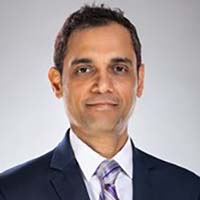
About Nitin Naik
Ready to Lead the Transformation?
- Schedule a Growth Strategy Dialog: Align your growth roadmap with Frost & Sullivan’s Visionary Growth Pipeline™ Dialog.
- Engage with Growth Experts: Co-design AI-enabled, data-driven operating models that scale industry-specific and commercial impact.
- Showcase Your Transformational Leadership: Position your organization as a transformation leader through Frost & Sullivan’s Transformational Growth Leadership platform.
- Join the Growth Council: Collaborate with industry leaders shaping the future of your ecosystem.
- Explore Best Practices Recognition: Be recognized for excellence in growth strategy, execution, and customer impact.
- Benchmark Your Industry Positioning on the Frost Radar™: Benchmark your growth performance and innovation strength against industry competitors.
- Tell Your Story: Accelerate awareness, engagement, and revenue growth through integrated brand and demand generation strategies.
Appendix: Advancing AI-enabled, Patient-Centric Healthcare
As healthcare organizations navigate rising complexity, workforce pressures, evolving value-based care models, and rapid advances in AI, the focus is shifting toward more connected, data-driven, and personalized approaches to patient engagement and care delivery.
To support healthcare leaders navigating this transformation, Frost & Sullivan provides forward-looking intelligence across healthcare IT, artificial intelligence, digital health, patient engagement, and value-based care, including:
📌 Global Healthcare IT Investment Growth Opportunities
📌 Growth Opportunities in the Global Healthcare IT Industry
📌 Growth Opportunities in Conversational AI in Healthcare, Global
📌 Frost Radar™: Payer-Provider Collaboration Solutions in North America
These analyses complement the key themes explored throughout this discussion, helping healthcare leaders navigate the intersection of AI, human expertise, patient engagement, medication adherence, and value-based care to build more connected and effective healthcare ecosystems.