Randall Lipps, Chairman, CEO, and Founder, Omnicell in conversation with Nitin Naik, Associate Partner & Global Practice Area Leader, Healthcare & Life Sciences, Frost & Sullivan, and Aarti Chitale, Industry Principal, Frost & Sullivan
Download this Transformational Growth Leadership Discussion with Randall Lipps
Building the Future of Autonomous Pharmacy
Medication management has become one of healthcare’s most strategic priorities. As health systems expand beyond traditional hospital settings into ambulatory care, specialty pharmacies, physician practices, and patients’ homes, providers are under growing pressure to deliver safer, more connected, and more efficient medication management across the entire continuum of care.
At the same time, rising specialty drug costs, workforce shortages, fragmented workflows, and increasing operational complexity are making it harder for pharmacists, nurses, and clinicians to focus on what matters most: delivering high-quality patient care. Rather than adding more technology, providers are increasingly looking for intelligent, connected medication management solutions that simplify decision-making, improve enterprise-wide visibility, and reduce the administrative burden on frontline caregivers.
In a conversation with Frost & Sullivan, Randall Lipps, Chairman, CEO, and Founder of Omnicell, shared his perspectives on the trends reshaping medication management, the industry-defined vision of the Autonomous Pharmacy, the growing role of AI and connected intelligence, and why empowering clinicians through technology will be fundamental to the future of healthcare.
“When technology works seamlessly in the background, pharmacists and nurses are free to focus fully on the expertise they bring to patient care.”
— Randall Lipps, Chairman, CEO, and Founder, Omnicell
Medication Management Is Becoming a Strategic Priority
Nitin Naik: Randy, healthcare is undergoing tremendous transformation, driven by digital health, AI, automation, cloud technologies, and new models of care. As you look across the industry today, what do you believe are the biggest trends reshaping medication management and pharmacy operations?
Randall Lipps: Medication management has become one of the most important strategic priorities for healthcare organizations because it sits at the intersection of patient care, operational efficiency, and financial performance.
One of the biggest shifts we are seeing is the rapid growth of specialty medications. These therapies are becoming increasingly sophisticated, but they’re also significantly more expensive. Managing them effectively requires far greater coordination across clinicians, pharmacists, health systems, and patients than traditional medication workflows ever demanded.
At the same time, healthcare delivery itself is changing. Care is increasingly moving beyond acute care hospitals into ambulatory settings, infusion centers, specialty pharmacies, physician practices, and even patients’ homes. Medication management must now extend seamlessly across every one of those environments. That creates enormous complexity.
Healthcare organizations are no longer managing medications within individual facilities. They’re managing medications across entire enterprises. Success increasingly depends on having enterprise-wide visibility across the entire medication-use process rather than optimizing individual departments independently.
This is where technology can make an enormous difference. Instead of asking clinicians to manage fragmented systems and disconnected workflows, healthcare organizations need intelligent platforms that connect information, improve visibility, and support better decision-making throughout the medication journey.
Thinking Beyond Individual Facilities
Nitin Naik: Those trends clearly point toward a much broader enterprise challenge. As Omnicell continues to grow, where do you see the company over the next five years, and how does that vision align with the changing needs of healthcare providers?
Randall Lipps: Our vision has always been larger than automation. It’s about helping healthcare organizations build a connected medication ecosystem that enables smarter, enterprise-wide decision-making.
Many health systems continue to operate with separate medication inventories across hospitals, outpatient facilities, surgery centers, and pharmacies. While each location may function reasonably well on its own, they often lack visibility into what’s happening across the broader organization. That creates inefficiencies that ultimately affect patient care.
You may have shortages in one facility while another location within the same health system has excess inventory. Clinicians spend valuable time searching for medications or manually coordinating supplies because information isn’t connected.
Our objective is to help health systems move beyond optimizing individual locations toward optimizing the entire enterprise. When organizations have visibility across all care settings, they can improve inventory management, reduce waste, strengthen medication availability, and support more consistent clinical decision-making.
The pandemic reinforced just how important enterprise visibility really is. Many organizations initially believed they simply didn’t have enough medications. In reality, they often didn’t know exactly what inventory they had or where it existed across the system.
Looking ahead, our aspiration is to help healthcare organizations move significantly closer to the industry-defined vision of the Autonomous Pharmacy. Success for us is not defined solely by business growth, but by how effectively we help providers create connected medication ecosystems that improve clinical outcomes, strengthen operational performance, and allow pharmacists and nurses to spend more time with patients.
Innovation That Starts with Customer Challenges
Nitin Naik: Innovation has been central to Omnicell’s journey over the years. How do you approach innovation today, and how do you ensure it continues creating meaningful value for customers?
Randall Lipps: Innovation has always started with listening. We have spent decades working alongside pharmacists, nurses, physicians, and healthcare leaders to understand the challenges they face every day. Technology only creates value when it solves meaningful problems for customers.
One of the things we have learned is that healthcare continues becoming more complex. As that complexity increases, clinicians need technology that simplifies their work rather than adding additional administrative tasks.
Our innovation strategy reflects that philosophy. We continually ask ourselves how we can remove friction from medication workflows, improve visibility, automate repetitive activities, and help clinicians spend more time caring for patients instead of managing processes.
At the same time, innovation requires looking well beyond today’s challenges. Our long-term vision has always been to create a connected medication ecosystem where intelligence flows seamlessly across the enterprise. Delivering our connected platform solution OmniSphere is the start of that broader journey, enabling healthcare organizations to transform fragmented medication workflows into intelligent, connected systems that support better clinical and operational decisions.
What Differentiates Omnicell
Nitin Naik: Healthcare technology has become an increasingly competitive space. What do you believe differentiates Omnicell from other medication management providers?
Randall Lipps: I think our biggest differentiator is the breadth of our vision. Many organizations focus on solving individual workflow problems or delivering point solutions. We’ve always believed healthcare providers need something much broader.
Medication management isn’t one workflow. It’s an interconnected process that spans procurement, inventory, dispensing, clinical decision support, pharmacy operations, nursing workflows, and patient care. Our objective is to connect those different components into a single intelligent medication management ecosystem. Another differentiator is our commitment to long-term partnerships.
We don’t simply deliver technology. We work closely with health systems as they continue evolving their medication management strategies over time. As healthcare changes, our responsibility is to continue innovating alongside our customers. Ultimately, our goal isn’t simply to automate existing workflows. It’s to fundamentally transform how medications are managed across the healthcare enterprise. That broader vision is what allows us to move beyond point solutions and help providers build truly connected medication ecosystems.
The Biggest Challenges Facing Healthcare Providers
Nitin Naik: Healthcare organizations are under pressure from every direction; financial constraints, staffing shortages, reimbursement challenges, and growing demand for operational efficiency. What do you see as the biggest roadblocks to achieving better outcomes?
Randall Lipps: One of the biggest challenges is that healthcare professionals are spending too much time managing operational complexity instead of caring for patients.
Nurses continue performing activities that technology should be able to simplify. Pharmacists are often managing inventory issues, shortages, and manual reconciliation processes that consume valuable time. At the same time, healthcare organizations continue operating across disconnected systems that require clinicians to move between multiple applications simply to complete routine tasks. That creates cognitive burden.
Technology should reduce that burden rather than contribute to it. Our goal is to build systems that anticipate what clinicians need, present relevant information when it’s needed, and help prevent errors before they occur. When technology quietly supports clinicians behind the scenes, healthcare professionals can focus their attention where it belongs: on patients.
Addressing these challenges requires more than automation alone. It requires intelligent systems that connect information, anticipate needs, and support clinicians with timely, actionable insights.
Enabling Autonomous Pharmacy Through AI and Connected Intelligence
Aarti Chitale: Randy, AI has become one of the biggest conversations across healthcare. How is Omnicell leveraging AI, cloud technologies, and connected intelligence to create meaningful value for providers, and how does that support your vision of Autonomous Pharmacy?
Randall Lipps: Healthcare already generates tremendous amounts of data. The challenge isn’t collecting more information. The challenge is converting that information into knowledge that helps people make better decisions. That’s exactly where AI becomes valuable.
When you combine enterprise-wide visibility with connected data and intelligent analytics, providers can begin identifying trends much earlier. They can anticipate shortages, optimize inventory, improve medication availability, and support clinicians before problems actually occur.
This is also where platforms like OmniSphere become increasingly important. By connecting information across the medication-use process, health systems gain a comprehensive view of their operations rather than isolated snapshots from individual departments. That enterprise-wide intelligence enables organizations to move from reactive medication management toward more predictive, proactive decision-making.
AI also has the potential to fundamentally change how clinicians interact with technology by surfacing the right information at the right time. Instead of forcing users to navigate multiple applications, search through dashboards, or manually reconcile information, intelligent systems should understand context, surface relevant insights automatically, and guide clinicians toward better decisions.
Ultimately, Autonomous Pharmacy is not about replacing pharmacists or clinicians. It’s about creating an intelligent ecosystem where technology quietly manages complexity, allowing healthcare professionals to focus their expertise where it creates the greatest value.
Becoming a Strategic Partner for Health Systems
Nitin Naik: Healthcare providers today are increasingly looking for long-term strategic partners rather than technology vendors. How is Omnicell evolving to support that shift?
Randall Lipps: That’s exactly how we view our role. Healthcare transformation isn’t something organizations accomplish by purchasing software. It’s a long-term journey that requires collaboration, continuous innovation, and measurable outcomes.
We work closely with health systems to understand their operational goals, their clinical priorities, and the challenges they’re trying to solve. Those conversations shape how we innovate and how we continue evolving our solutions.
As healthcare changes, our customers’ needs also change. That means we have to continue adapting alongside them. Our responsibility extends beyond delivering technology. We want to help organizations achieve better clinical outcomes, improve operational performance, optimize medication management, and create more sustainable healthcare delivery models.
Ultimately, success isn’t measured by how many technologies we’ve deployed. It’s measured by whether we’ve helped providers improve care while making the work of clinicians easier.
Building Confidence Through Innovation and Trust
Nitin Naik: Healthcare organizations are adopting new technologies faster than ever before. How do you build customer confidence while continuing to innovate?
Randall Lipps: Trust is earned over time. Healthcare leaders make decisions that directly affect patient safety, clinical outcomes, and operational performance. That makes trust one of the most important foundations of every technology partnership.
We focus on delivering solutions that are reliable, measurable, and capable of creating tangible improvements for our customers. We also recognize that innovation must happen responsibly. Healthcare leaders need confidence that the technologies they implement are secure, scalable, and capable of evolving alongside changing clinical and regulatory requirements.
Ultimately, customers trust partners who consistently deliver results. By working alongside health systems throughout their transformation journey, we aim to build long-term relationships that help providers improve medication safety, strengthen enterprise performance, and create more resilient healthcare operations.
Creating a Culture That Embraces the Future
Aarti Chitale: Innovation begins with people. How would you describe Omnicell’s culture, and how does it support your long-term vision?
Randall Lipps: Our culture has always been built around innovation, learning, and a willingness to embrace change. Healthcare is evolving continuously, and our organization has to evolve with it.
We encourage our teams to think beyond today’s challenges and imagine what healthcare could become several years from now. That requires curiosity, collaboration, and a willingness to challenge conventional thinking. At the same time, innovation only matters if it improves people’s lives. Everything we develop ultimately comes back to supporting clinicians and improving patient care. When our teams understand that purpose, it creates tremendous energy throughout the organization.
We also recognize that no single company can transform healthcare alone. Collaboration with customers, partners, clinicians, and the broader healthcare ecosystem remains essential as we continue advancing toward the vision of Autonomous Pharmacy.
Looking Ahead with Optimism
Nitin Naik: Finally, Randy, after everything we have discussed today, what excites you most about the future? And if there’s one message, you would like healthcare leaders to take away from this conversation, what would it be?
Randall Lipps: What excites me most is the pace of innovation. We are entering a period where technologies like AI, cloud computing, connected intelligence, and advanced analytics are becoming practical tools that can genuinely improve healthcare delivery.
For many years, we have talked about these possibilities. Today, we are beginning to see them become reality. Healthcare has access to enormous amounts of information. The opportunity now is to transform that information into knowledge that supports better decisions throughout the medication-use process.
My advice to healthcare leaders is simple: lean into the future.
Transformation is coming whether we choose to participate or not. Organizations that embrace innovation, remain open to new ideas, and actively help shape the future will be far better positioned than those that wait for change to happen around them. Technology will continue evolving, but our purpose remains constant. If we can reduce the burden on clinicians, improve medication safety, strengthen operational performance, and ultimately give healthcare professionals more time to care for patients, then we’ve accomplished something truly meaningful.
Closing Reflection: Creating the Intelligent Medication Ecosystem
Autonomous Pharmacy represents far more than the next stage of pharmacy automation. It reflects a broader transformation in how healthcare organizations connect technology, intelligence, and clinical expertise to improve medication management across the entire continuum of care. As health systems become more distributed and medication therapies increasingly complex, providers will need intelligent ecosystems that deliver enterprise-wide visibility, predictive insights, and connected decision-making.
For Omnicell, the opportunity lies in helping healthcare organizations move beyond fragmented workflows to create connected, intelligent medication management ecosystems where AI, connected intelligence, cloud technologies, and automation work together to reduce cognitive burden, improve operational efficiency, and strengthen patient safety. Rather than replacing clinicians, technology becomes an enabler—allowing pharmacists, nurses, and physicians to spend more time delivering care and less time managing complexity.
As Randall Lipps emphasized throughout the discussion, the future belongs to healthcare organizations that embrace innovation, transform data into actionable knowledge, and actively participate in shaping the next generation of medication management. By combining technology with human expertise, the industry can move closer to realizing the vision of Autonomous Pharmacy while creating safer, smarter, and more patient-centered healthcare systems.

About Randall Lipps
Randall Lipps is the Chairman, Chief Executive Officer, and Founder of Omnicell, a global leader in medication management solutions and pharmacy automation. Since founding the company in 1992, he has led Omnicell’s vision of transforming medication management through automation, connected intelligence, and cloud technologies. Under his leadership, the company has expanded its portfolio to help healthcare providers improve medication safety, operational efficiency, and patient outcomes across the continuum of care as they pursue the industry-defined vision of the Autonomous Pharmacy.
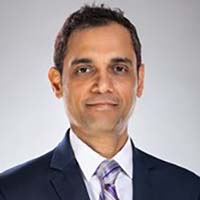
Nitin Naik is an accomplished leader with 25+ years driving transformational growth for Fortune 500 pharmaceutical, biotechnology, and medical device companies. As an Associate Partner at Frost & Sullivan, Nitin leads the Healthcare and Life Sciences practice, directing analyst and consulting teams that unlock growth opportunities through advanced analytics and commercial intelligence. Nitin brings deep expertise at the intersection of disruptive technologies, and new business models and recognized for implementing executable strategies across New Product Planning, Business Development & Licensing, M&A, and Go-to-market initiatives. Prior to joining Frost & Sullivan, he has served in leadership positions with A*STAR Singapore and other healthcare organizations.
About Nitin Naik

About Aarti Chitale
Aarti Chitale brings 15+ years of expertise in pharmaceutical contract research and technology‑enabled drug development. She leads the Contract Research Services program, guiding strategy across tech vendors, eClinical providers, and central lab ecosystems. As a trusted growth expert, she supports global stakeholders in navigating disruption and identifying high‑impact opportunities.
Ready to Lead the Transformation?
- Schedule a Growth Strategy Dialog: Align your growth roadmap with Frost & Sullivan’s Visionary Growth Pipeline™ Dialog.
- Engage with Growth Experts: Co-design AI-enabled, data-driven operating models that scale industry-specific and commercial impact.
- Showcase Your Transformational Leadership: Position your organization as a transformation leader through Frost & Sullivan’s Transformational Growth Leadership platform.
- Join the Growth Council: Collaborate with industry leaders shaping the future of your ecosystem.
- Explore Best Practices Recognition: Be recognized for excellence in growth strategy, execution, and customer impact.
- Benchmark Your Industry Positioning on the Frost Radar™: Benchmark your growth performance and innovation strength against industry competitors.
- Tell Your Story: Accelerate awareness, engagement, and revenue growth through integrated brand and demand generation strategies.
Appendix: Advancing Autonomous Pharmacy and Intelligent Medication Management
As healthcare organizations accelerate digital transformation, the focus is shifting toward AI-enabled medication management, connected intelligence, and enterprise-wide visibility to improve patient safety, reduce clinician burden, and optimize operational performance.
To support healthcare leaders navigating this transformation, Frost & Sullivan provides forward-looking intelligence across healthcare IT, AI, digital health, and smart hospitals, including:
📌 Global Healthcare IT Investment Growth Opportunities, 2026
📌 Innovations and Growth Opportunities in Virtual Healthcare Assistants
📌 Top 5 Growth Opportunities in Smart Hospitals, 2026
📌 Growth Opportunities in Conversational AI in Healthcare, Global
These analyses complement the key themes explored throughout this discussion, helping healthcare leaders build more intelligent, connected, and patient-centric medication management ecosystems.