Maruti Suzuki’s entry, JSW Group’s ambitions, and surging oil prices could fast-track India’s transition to electric mobility
India’s electric passenger vehicle market is expanding rapidly. Improvements in battery technology, rising environmental awareness, and supportive government policies are encouraging more consumers to consider electric mobility. Electric vehicles (EVs) are increasingly attracting mainstream buyers, particularly in urban areas where running costs and environmental concerns influence purchase decisions.
Domestic automakers continue to spearhead this growth. Tata Motors currently dominates the segment with roughly 60% market share, while JSW MG Motor India and Mahindra & Mahindra are strengthening their positions through new electric model launches. Mahindra recorded particularly strong growth over the past year as its electric passenger vehicle portfolio gained traction.
Three developments now have the potential to reshape the market’s next phase of growth. First, Maruti Suzuki, India’s largest automaker, has entered the electric passenger vehicle segment. Second, the JSW Group plans to launch a new independent automotive brand focused on hybrids and EVs. Third, rising global oil prices, triggered by geopolitical tensions, could strengthen the economic case for electric mobility. Together, these developments could influence both competitive dynamics and consumer adoption patterns across the Indian automotive market.
Maruti Suzuki Enters the EV Segment
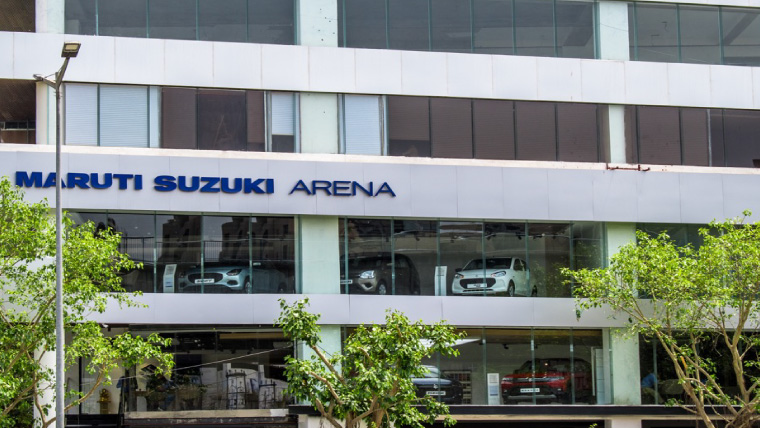
The entry of Maruti Suzuki into the EV segment has significant market implications. The company commands more than 40% of India’s ICE passenger vehicle market and sells nearly two million cars annually. This scale, together with its extensive dealership and service infrastructure network, reputation for affordability, and deep customer familiarity, are advantages that could motivate EV adoption among first-time buyers.
In February 2026, the automaker launched the Maruti Suzuki eVitara, a midsize electric SUV that represents the company’s first battery-electric vehicle for India. The launch signals a strategic shift for the automaker, which previously focused primarily on hybrid technologies rather than fully electric vehicles.
The model offers a claimed driving range of more than 500 kilometers and introduces several new safety and connectivity technologies, including a Level-2 advanced driver assistance system (ADAS). The vehicle also carries a five-star safety rating under Bharat NCAP, strengthening its positioning in a competitive SUV segment.
Maruti Suzuki has also adopted an innovative pricing approach to address cost concerns among Indian buyers. The eVitara is available with a Battery-as-a-Service (BaaS) option that separates battery ownership from the vehicle purchase. This model can reduce upfront ownership costs by 40–50%, potentially making EVs more accessible to price-sensitive buyers.
The company is also investing in charging infrastructure to support adoption. Its ecosystem strategy includes more than 2,000 charging points across the country, along with partnerships to expand charging access for customers.
Our Perspective
Frost & Sullivan estimates that EVs currently account for about 3.6% of total passenger vehicle sales in India, with hybrids (including mild hybrids and full hybrids) contributing around 6.6%. From 2024 to 2025, year-on-year sales of all key segments increased: battery EVs (BEVs) from around 96,649 to 178,115; plug-in hybrid EVs (PHEVs) from 95 to 104, and full hybrid EVs (FHEVs) from 99,079 to 112,614. The exception was mild hybrid EVs (MHEVs), whose sales fell from 262,048 to 216,018 units.
Frost & Sullivan projects overall passenger EV sales to reach 240,000 in 2026. While this indicates a vibrant market with significant opportunities for growth, the fact is that it is also becoming increasingly competitive. The eVitara will compete with electric SUVs such as the Tata Curvv EV, MG ZS EV, Hyundai Creta Electric and Mahindra’s XUV family, including the BE.05 and BE.07.
Maruti Suzuki also faces challenges as a late entrant to the EV market. Established players such as Tata Motors and Mahindra & Mahindra have already built strong brand recognition in the EV space. In addition, Maruti’s EV technology relies partly on collaboration with Japanese partners, which could limit rapid product experimentation compared with dedicated EV platforms. In addition, the BaaS model remains largely untested in the Indian market. Moreover, supply chain uncertainties could pose risks if global tensions disrupt component availability.
Even so, Maruti Suzuki’s scale, strong brand trust, and nationwide service network could play a decisive role in expanding its EV footprint in India.
JSW Motors Builds a New Domestic EV and Hybrid Brand
Another major development in the automotive sector is the planned entry of the JSW Group into passenger vehicle manufacturing through a new venture called JSW Motors. This new entity will operate independently from the group’s existing joint venture with SAIC Motor, which currently markets vehicles under the MG brand in India.
JSW plans to invest nearly ₹30,000 crore (about $3 billion) in its automotive ambitions over the next five years. The strategy focuses on building a domestic automotive brand centered on new-energy vehicles, including hybrids and battery electric models. By establishing its own automotive identity, the group aims to create a fully homegrown automotive manufacturer capable of competing with established companies such as Maruti Suzuki, Tata Motors, Mahindra & Mahindra, and Hyundai Motor India.
The company’s first vehicle is expected to be a rugged midsize SUV based on the Jetour T2 platform developed by China’s Chery Automobile. The SUV will likely feature a turbo-petrol plug-in hybrid powertrain and is expected to launch in India around late 2026
Our Perspective
JSW’s broader strategy extends beyond vehicle assembly. The group is exploring vertical integration across the EV supply chain, including lithium-ion battery manufacturing and semiconductor partnerships. Leveraging its internal steel and aluminum production capabilities could significantly reduce vehicle manufacturing costs by 15–20%. These synergies will provide the conglomerate with significant cost advantages compared with many new entrants.
The company plans to focus heavily on hybrid vehicles in the initial phase. Hybrids offer a practical bridge between conventional engines and full EVs, particularly in markets where charging infrastructure remains uneven. This positioning could appeal to fleet operators and long-distance users who remain cautious about relying entirely on EV charging networks.
However, JSW Motors will face several hurdles as it builds a new automotive brand. Unlike established automakers, the company does not yet have a nationwide dealer network or service infrastructure. Building these capabilities will be a lengthy process and will require sizeable investment. Brand recognition also remains limited compared with automakers like Maruti Suzuki or Tata Motors.
In addition, scaling vehicle production is capital-intensive, particularly in an environment where inflation and rising commodity prices can affect margins. If government EV incentives weaken over time, JSW may also face pressure to maintain competitive pricing while expanding its product lineup.
Even with these risks, JSW’s deep financial resources, technology partnerships, and supply chain integration could make it a strong new competitor in India’s evolving EV and hybrid vehicle market.
Oil Price Volatility Strengthens the Case for Electric Offerings
Global geopolitical developments are also shaping the outlook for India’s EV market. Rising tensions involving the US, Israel, and Iran have pushed crude oil prices higher and created uncertainty in global energy markets.
With disruptions intensifying, oil prices are rapidly climbing. For India, which imports a large portion of its crude oil through the Strait of Hormuz, higher oil prices can quickly translate into rising petrol and diesel costs.
Our Perspective
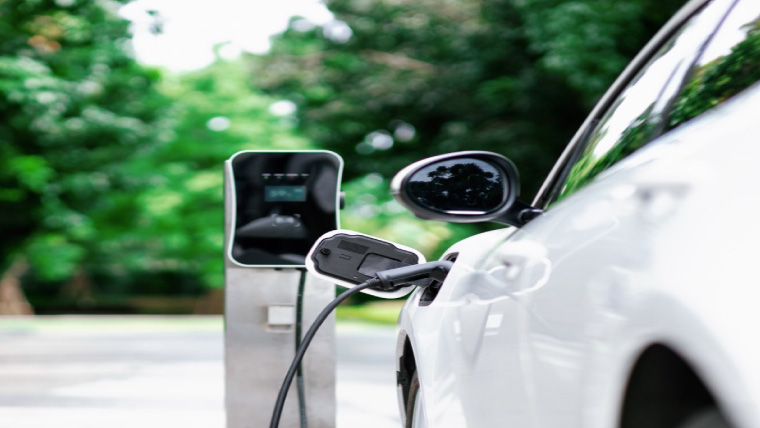
Higher fuel prices improve the economics of owning an EV. While EVs typically cost about ₹1–2 per kilometer to operate, petrol and diesel vehicles often cost several times more depending on fuel prices. As fuel costs climb, the gap in running costs widens, making EVs more attractive for consumers who drive frequently.
As importantly, charging infrastructure is expanding steadily. Frost & Sullivan research reveals that India currently has more than 15,000 charging locations with 30,000+ connectors. There are just over 29,000 public EV charging stations that host around 30% of fast chargers. From a base of around 1 connector for every 7 EVs, robust infrastructure build-out is set to reduce this figure to 5 EVs for 1 connector by 2030.
Expanding enabling infrastructure, together with higher fuel prices, can, therefore, accelerate the shift toward EV adoption, particularly among high-mileage users such as ride-hailing drivers and fleet operators. Buyers increasingly evaluate total cost of ownership rather than focusing only on the purchase price.
However, rising oil prices can also create short-term economic pressures. Higher fuel costs result in rising logistics expenses and contribute to inflation, which may temporarily reduce consumer spending on large purchases such as new vehicles.
Over the longer term, sustained fuel price volatility could strengthen the case for electric mobility in India. As consumers become more sensitive to fuel costs and policymakers continue to promote clean transportation, including developing charging infrastructure networks, electric passenger vehicles are likely to play a progressively more central role in the country’s automotive landscape.
For an overview, please see Electric Vehicle Market, India, 2024–2031, or contact [email protected] for information on a private briefing.