The Next Frontier in Clean Energy: Emerging Growth Opportunities in Geothermal Energy
The global energy landscape is transforming faster than ever. Geothermal energy is no longer a niche renewable option. It is gaining momentum as a firm, scalable solution for energy security, industrial heat decarbonization, and 24/7 carbon-free electricity.
With advances in enhanced geothermal systems, advanced drilling technologies, and digital subsurface modeling, geothermal energy is moving beyond conventional hydrothermal regions and into new power and heat applications. But as policy mandates, technology innovation, and cross-sector demand converge, who will lead the next phase of geothermal growth? And more importantly, how prepared is your organization to capitalize on geothermal’s evolution into multi-sector clean infrastructure?
Revealed: Geothermal Energy’s Next Growth Phase
Gain a clear view of how next-generation technologies are reshaping clean power, industrial heat, and long-term energy security.
What’s In It for You?
- Key growth opportunities and best practices shaping geothermal deployment
- Technology pathways, adoption trends, and commercialization insights across regions
These questions sit at the core of Frost & Sullivan’s analysis on Geothermal Energy Technology: Emerging Innovations and Growth Opportunities, which examines how technology readiness, regional adoption, and commercialization pathways are reshaping the global geothermal landscape.
Strategic Imperatives Accelerating Geothermal Energy Growth
The geothermal landscape today looks markedly different from its earlier phase, when development depended heavily on naturally occurring reservoirs and long project timelines. Innovation, policy alignment, and cross-sector demand are now reshaping the ecosystem, creating new strategic priorities.
- Transformative Megatrends: Net-zero regulations, electrification of heat and power, energy security pressures, and rising demand from data centers are increasing reliance on firm, carbon-free energy sources.
- Disruptive Technologies: Enhanced geothermal systems, advanced drilling techniques, and artificial intelligence–enabled subsurface modeling are lowering costs, reducing development risk, and expanding viable deployment regions.
- Industry Convergence: Power generation, district heating, industrial heat, and geothermal–lithium co-production are converging into integrated clean energy solutions with stronger commercial potential.
Which technologies, partnerships, and deployment models will define geothermal’s next phase of scalable growth?
Listen to the Growth Podcast on Emerging Innovations in Geothermal Energy
Growth Drivers Accelerating Geothermal Adoption
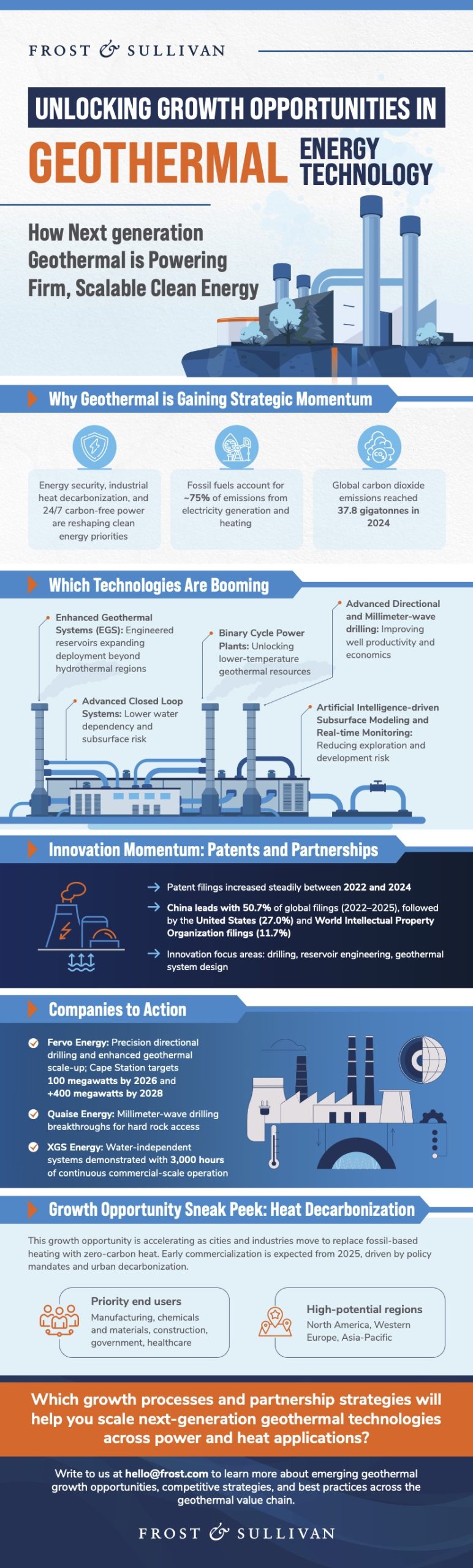
Geothermal energy is gaining momentum as multiple demand-side and technology-led forces converge across power and heat markets.
- Demand for Clean Baseload Power: Utilities, data centers, and captive power users are prioritizing reliable, weather-independent clean energy sources, strengthening geothermal’s appeal relative to intermittent renewables.
- Heat Decarbonization Needs: Geothermal energy provides a low-carbon alternative to fossil-based heating. The expansion of district heating networks and ground-source heat pump systems is driving adoption in urban and industrial infrastructure.
- Lithium Co-production: Lithium extraction from geothermal brines is improving project economics, reinforcing geothermal’s role within integrated energy and critical mineral value chains.
How is your energy strategy aligning with emerging geothermal technologies to support energy security goals?
Key Geothermal Technologies Expanding Deployment Pathways
Geothermal growth is being enabled by a portfolio of power generation technologies that address long-standing constraints around resource availability, risk, and scalability.
- Enhanced Geothermal Systems (EGS): Creating engineered reservoirs to enable geothermal deployment beyond naturally permeable hydrothermal regions.
- Advanced Closed-Loop Systems: Reducing dependence on water availability and subsurface uncertainty through sealed, circulating heat extraction models.
- Binary Cycle Power Plants: Unlocking lower-temperature geothermal resources, expanding the addressable market for electricity generation.
- Dry Steam Power Plants: Providing proven baseload power in regions with high-quality steam resources.
- Flash Steam Power Plants: Supporting large-scale electricity generation from high-temperature geothermal fluids.
Together, these technologies are shifting geothermal from a geographically constrained solution to a flexible, multi-technology clean energy platform, supporting power generation, heat applications, and long-term decarbonization strategies.
How prepared is your organization to integrate next-generation geothermal technologies into long-term energy portfolios?
| Companies to Action in Geothermal Energy Technology |
Several innovators are shaping the commercialization trajectory of next-generation geothermal through advances in drilling, reservoir engineering, and system scalability.
|
| Download the Sample for deeper analysis on geothermal growth leaders. |
Partnerships and Intellectual Property Are Accelerating Geothermal Energy Scale
Geothermal energy commercialization is increasingly being shaped by ecosystem partnerships and intellectual property momentum, signaling a shift from pilot projects to scalable deployment models.
- Ormat Technologies and Sage Geosystems are integrating next-generation pressure-based geothermal energy technology into existing power plants to shorten time-to-market and improve performance.
- XGS Energy and Meta Platforms are collaborating to develop large-scale geothermal energy capacity to support data center operations and grid decarbonization.
- Sage Geosystems and California Resources Corporation are advancing subsurface energy storage and geothermal energy power generation through joint commercial frameworks.
These are some of the collaborations that highlight how utilities, technology providers, and large energy consumers are aligning to de-risk projects and accelerate deployment.
Which partnerships and intellectual property strategies strengthening your position in geothermal’s next phase of commercialization?
Growth Opportunity: Geothermal Brine Co-production with Lithium and Critical Minerals
Geothermal brine co-production is emerging as a high-impact growth pathway that combines clean energy generation with the extraction of lithium and other critical minerals. By integrating mineral recovery into geothermal operations, developers are strengthening project economics while supporting battery supply chains and energy transition goals.
What’s Driving Adoption
- Rising lithium demand from electric vehicles, battery manufacturing, and electronics
- Pressure to localize and decarbonize critical mineral supply chains
- Integration of lithium extraction with high-brine, high-temperature geothermal reservoirs
- Policy support for clean energy and critical mineral security
- Multi-revenue models that improve geothermal project viability
Why It Matters: Geothermal brine co-production transforms geothermal assets into dual-purpose infrastructure, delivering both firm clean energy and critical minerals. This model creates stronger investment cases, reduces supply chain risk for battery materials, and positions geothermal as a strategic enabler of the clean energy and electrification ecosystem.
Advancing Geothermal Growth with Frost & Sullivan
As geothermal energy scales beyond niche deployment, success will depend on how effectively organizations align technology innovation, partnerships, and commercialization strategies across power, heat, and critical minerals. Frost & Sullivan supports organizations with actionable insights, growth opportunity identification, and strategic guidance to navigate this transition. Are you ready to position geothermal as a core clean energy asset?
Frequently Asked Questions (FAQs)
- What is geothermal energy and how is it used?
Geothermal energy is derived from heat stored beneath the Earth’s surface. It is used to generate electricity through steam-driven power plants or to provide direct heat for applications such as district heating, industrial processes, and ground-source heat pump systems.
- What is driving renewed interest in geothermal energy today?
Rising energy security concerns, net-zero commitments, and the need for firm, 24/7 carbon-free power are accelerating geothermal adoption. Advances in drilling, reservoir engineering, and digital subsurface modelling are also expanding deployment beyond traditional hydrothermal regions.
- How do next-generation geothermal technologies differ from conventional systems?
Next-generation technologies, such as enhanced geothermal systems and closed-loop configurations, reduce reliance on naturally permeable reservoirs. These approaches lower subsurface risk, expand geographic viability, and improve the scalability of geothermal projects.
- What role does geothermal play in heat decarbonization?
Geothermal provides a zero-carbon alternative for heating applications, supporting district heating networks and industrial process heat. This makes it a critical solution for decarbonizing sectors where electrification alone is challenging.
- How does geothermal brine co-production with lithium create additional value?
Lithium extraction from geothermal brines improves project economics by adding a secondary revenue stream. This integrated model supports battery supply chains while reinforcing geothermal’s role in clean energy and critical mineral ecosystems.
Ready to Lead the Transformation?
- Book a Growth Strategy Session: Align your growth roadmap with Frost & Sullivan’s visionary Growth Pipeline™ Dialog.
- Engage with Growth Experts: Co-design AI-enabled, data-driven operating models that scale industry-specific and commercial impact.
- Share Your Transformation Story: Position your organization as a transformation leader through Frost & Sullivan’s Transformational Growth Leadership platform.
- Join the Growth Council: Collaborate with industry leaders shaping the future of your ecosystem.
- Nominate for the Best Practices Recognition: Be recognized for excellence in growth strategy, execution, and customer impact.
- Demonstrate Industry Positioning on the Frost Radar™: Benchmark your growth performance and innovation strength against industry competitors.
- Activate Brand & Demand Growth: Accelerate awareness, engagement, and revenue growth through integrated brand and demand generation strategies.