An interview with B.K. Soni, Chairman and Managing Director of Ecoreco
India’s digital economy is accelerating rapidly, but so is the country’s electronic waste generation. Rising consumption of consumer electronics, IT infrastructure, appliances, and connected devices is increasing the need for more effective and sustainable recycling systems.
At the same time, India’s formal e-waste ecosystem continues to face structural barriers. Informal sector dominance, uneven compliance, and fragmented implementation are limiting the effectiveness of existing regulations and slowing progress toward circularity.
In this Transformational Growth Leadership discussion, B.K. Soni, Chairman and Managing Director of Ecoreco, shares his perspective on the evolution of India’s e-waste recycling industry, the unintended consequences of regulatory shifts, and the economic realities shaping formal recycling adoption. Drawing on more than two decades of experience in the sector, he discusses why building a circular e-waste ecosystem will require more than regulation alone, and how India must rethink infrastructure, incentives, and accountability to enable long-term sustainability.
“Till the point there is a price difference between informal and formal recycling, major transformation is not possible.”
— B.K. Soni, Chairman & Managing Director, Ecoreco
Building India’s Formal E-waste Recycling Industry
Fredrick Royan: Ecoreco has been one of the pioneers of formal e-waste recycling in India. Can you take us through the company’s journey and how the industry has evolved over the years?
B.K. Soni: I began this journey in 2005, at a time when formal e-waste recycling was still in its very early stages in India. I often say, somewhat humorously, that I must be blamed for initiating the formal e-waste recycling industry in the country.
When I reflect on the industry’s evolution, I generally view it in two distinct phases: the pre-regulatory period from 2005 to 2012, and the regulatory era following the introduction of India’s first formal E-Waste Management Rules in 2012.
Interestingly, during the earlier phase, socio-environmental decisions—including those related to recycling and pollution control—were often made directly at the corporate leadership or board level. There was a stronger emphasis on environmental responsibility, health, safety, and sustainable disposal practices, rather than purely commercial considerations. Most of the organizations I engaged with during this period were genuinely committed to supporting environmentally sound recycling systems and protecting health, safety, and the environment (HSE).
Following the implementation of formal regulations, the ecosystem understandably became more compliance-driven. However, over time, the focus increasingly shifted toward legal interpretation, documentation, and cost optimization. As a result, the broader environmental objectives that originally drove formal recycling initiatives have, in some cases, become secondary to procedural compliance.
Why Regulations Alone Have Not Delivered Transformation
Fredrick Royan: India has introduced multiple regulatory changes over the years. Why do you believe the market still struggles to achieve meaningful transformation?
B.K. Soni: Over the past decade, India’s e-waste management framework has undergone multiple regulatory revisions, including frequent changes in Rules and Extended Producer Responsibility (EPR) models, an increasing emphasis on collection, exclusion of Bulk Consumers, introduction of dismantlers, followed later by re-furbishers, collectively, these shifts have, to some extent, diluted the scale and effectiveness of formal recycling.
A key structural challenge has been the gradual policy shift toward collection-centric mechanisms, despite collection historically being one of the stronger capabilities of the informal sector. In contrast, the more critical national priority has always been ensuring environmentally sound processing, transparent traceability, and genuinely compliant recycling practices.
While many of these reforms were undoubtedly introduced with positive intentions, in practice, they have often evolved into systems that prioritize financial interests over the core objectives of responsible recycling and the protection of health, safety, and the environment.
At the same time, the regulatory ecosystem has, in certain areas, become heavily documentation-driven, where procedural compliance can sometimes overshadow actual recycling performance. This has occasionally created gaps between reported outcomes and on-ground operational realities.
This disconnects between policy intent, and practical execution remains one of the principal reasons why, despite more than two decades of industry development, India’s formal recycling sector continues to represent only a limited share of the broader e-waste management market.
Balancing Profitability with Compliance and Responsible Recycling
Fredrick Royan: Despite these challenges, Ecoreco has remained profitable. How have you managed to sustain the business while staying committed to compliance and responsible recycling?
B.K. Soni: We have consciously chosen to maintain high standards of compliance and operational integrity, even when this requires a more selective approach to business growth.
While our topline may appear comparatively moderate relative to certain market participants, our focus has consistently remained on profitability, strengthening cash reserves, and investing in advanced technologies to recover metals at the highest purity levels. We prioritize governance, sustainability, and long-term value over volume-driven growth with minimal margins, excessive borrowing, or dependence on third-party equity infusion to sustain cash flow.
We primarily work with customers who value environmental responsibility, traceability, and strong compliance standards, rather than those driven solely by lowest-cost considerations or those who view the disposal of hazardous waste merely as a formality.
These customers recognize the importance of responsible recycling and are therefore willing to invest appropriately in quality services. This has enabled us to maintain healthy EBITDA (Earnings Before Interest, Taxes, Depreciation, and Amortization) performance while upholding transparency, governance, and operational excellence.
Additionally, we operate as a debt-free company. Our long-term philosophy has always prioritized sustainable value creation, shareholder protection, and financial discipline over aggressive, leveraged expansion.
Confronting the Economics of Informal Recycling
Fredrick Royan: What do you believe is the single biggest barrier preventing large-scale formalization of India’s e-waste ecosystem?
B.K. Soni: The most significant barrier to large-scale formalization of the recycling ecosystem remains economic practicality. This fundamental reality explains why the informal sector has historically faced little meaningful challenge from formal recyclers or regulatory structures. As long as a substantial pricing gap persists between informal and formal recycling channels, achieving widespread systemic transformation will remain difficult.
Consumers and businesses disposing of end-of-life electronics often prioritize immediate financial returns, while environmental considerations may not always serve as the primary deciding factor. Informal channels frequently offer higher short-term monetary value due to their significantly lower operating costs.
In contrast, formal recyclers shoulder substantial compliance-related financial burdens, including taxation, environmental safeguards, worker safety standards, governance frameworks, reporting obligations, and significantly higher capital and operational expenditures. Informal operators, by comparison, often function with minimal regulatory obligations, lower infrastructure investments, and reduced operating costs. This structural imbalance naturally creates a persistent economic disadvantage for the formal sector.
Even among producers and major brands, there often remains considerable cost sensitivity toward fully supporting responsible recycling and compliance frameworks, despite the fact that such expenditures typically represent only a very small fraction of their revenues, profitability, or the incentives and Production Linked Incentive (PLI) benefits they receive from governments.
In practical terms, fully supporting environmentally compliant recycling would require only marginal financial commitments from many of these organizations, while delivering disproportionately greater long-term benefits through enhanced public health, environmental protection, critical resource security, and broader national economic productivity.
Therefore, meaningful and sustainable transformation of the recycling ecosystem will depend on creating stronger alignment between corporate responsibility, environmental priorities, and economic incentives. Without addressing this underlying economic imbalance, large-scale formalization will continue to face significant structural limitations.
Creating Infrastructure Before Enforcing Formalization
Fredrick Royan: Many discussions focus on integrating the informal sector into the formal ecosystem. What is your perspective on that approach?
B.K. Soni: The concept of integrating the informal sector into the formal ecosystem is strategically important, but practical implementation requires careful consideration. A fundamental question remains: what economic incentives would encourage informal participants to transition into systems that may initially increase costs or reduce operational flexibility?
In my view, infrastructure development should be prioritized alongside regulatory enforcement. Governments can play a transformative role by developing structured recycling and dismantling zones that provide organized facilities, shared infrastructure, transparent marketplaces, and practical operational frameworks.
Such systems would allow informal participants to gradually operate within more structured environments while preserving economic viability. Once this foundation is established, greater transparency, taxation, traceability, and environmental compliance can evolve more naturally over time. In many respects, this mirrors broader public infrastructure development models—where ecosystem creation precedes deeper formalization.
Expanding Beyond Traditional Recycling Services
Adyasha Mohanty: Ecoreco has also expanded into areas like data destruction and IT asset disposition. How did those capabilities evolve?
B.K. Soni: Many of these capabilities have been integral to our business for many years. For example, we introduced mobile data destruction services as early as 2008 and were awarded with the Gold Medal by the DST, FICCI & Lockheed Martin for pioneering data destruction facilities on wheels in India.
We also developed India’s the first lamp recycling on wheels facility in 2009 and several specialized recycling solutions well before these became mainstream industry priorities.
Our philosophy has consistently been that responsible recycling should extend beyond material destruction alone. It should also encompass repair, refurbishment, IT asset disposition, lifecycle extension, and wherever feasible before shredding for responsible recycling & resource recovery.
At the same time, we remain disciplined in our approach to growth. Our priority continues to be long-term value creation, governance, profitability, and sustainable business development rather than expansion for topline growth alone.
Shaping the Future of E-waste Circularity
Fredrick Royan: Looking ahead, what is the one message you believe policymakers and the industry should focus on most seriously?
B.K. Soni: The most critical message for policymakers and industry stakeholders is that regulation, while essential, cannot by itself transform the recycling ecosystem without robust implementation mechanisms and targeted financial support for formal recyclers to bridge the persistent pricing gap between formal and informal operating models.
For meaningful and measurable progress, policy frameworks must go beyond regulatory design to effectively address non-compliance, reduce structural economic disparities, strengthen enforcement, and establish greater operational transparency across the value chain.
Ultimately, sustainable circularity can only be achieved through the strategic alignment of economic viability, practical infrastructure, responsible producer participation, transparent governance, and long-term commitment from all ecosystem participants.
When these elements function cohesively, genuine transformation becomes both practical and scalable. Without such alignment, regulatory evolution alone is unlikely to deliver substantial real-world impact.
Closing Reflection: Building a Sustainable E-waste Ecosystem
India’s e-waste ecosystem is entering a critical phase as rising digital consumption, growing environmental awareness, and evolving regulations continue to reshape the industry. However, building a truly sustainable circular economy will require more than policy expansion alone.
Ecoreco’s journey highlights the importance of combining responsible recycling practices with operational transparency, infrastructure development, and long-term financial discipline. The discussion also underscores the need to address structural pricing gaps, strengthen implementation frameworks, and create more practical pathways for formalization.
As India’s e-waste volumes continue to grow, organizations that can align compliance, economics, and environmental responsibility will play an increasingly important role in advancing sustainable circularity.
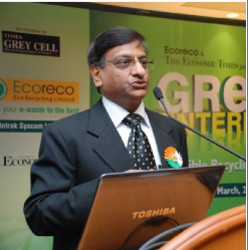
About B.K. Soni
Chairman & Managing Director of Eco Recycling Ltd (Ecoreco)
B.K. Soni is the Chairman & Managing Director of Eco Recycling Ltd (Ecoreco). A visionary leader in India’s waste management and recycling sector, he is the pioneer of the country’s formal e-waste recycling industry. Recognizing the immense strategic, environmental, and economic potential of organized e-waste recycling as early as 2005, he has played an instrumental role in shaping the sector’s evolution and advancing India’s circular economy framework.
Under his dynamic leadership, Ecoreco has grown into one of India’s leading formal e-waste recycling enterprises, establishing a strong nationwide presence built on responsible recycling practices, regulatory excellence, operational transparency, and long-term sustainable growth.
A qualified Cost Accountant by profession, Mr. Soni is widely respected not only as an industry leader but also as an influential voice in policy advocacy, regulatory development, and sustainable resource management. His extensive contributions to industry and governance include serving as Director on the Board of the Material Recycling Association of India (MRAI), Member of TERRA, Member of the Technical Appraisal Committee of SERI (R2), and former member of the Maharashtra Pollution Control Board’s Expert Group on E-waste Management.
Through his strategic foresight, policy engagement, and commitment to responsible industrial transformation, Mr. Soni continues to play a defining role in strengthening India’s formal recycling ecosystem and positioning it for global relevance.
Associate Partner and Global Practice Area Leader, Sustainability and Circular Economy at Frost & Sullivan
Fredrick Royan is Associate Partner of the Sustainability and Circular Economy practice at Frost & Sullivan and the Smart Water Network (SWAN) Council Chair. With over 20 years analyzing the global water sector, he led the launch of the Smart Water Program in 2010 and now shapes the Global Water Research Program, publishing authoritative reports on Smart Water Grids and related segments. He holds a master’s in Environmental Protection and Management from the University of Edinburgh as a Centenary Chevening Scholar and has also been conferred the Frost & Sullivan Fellowship.
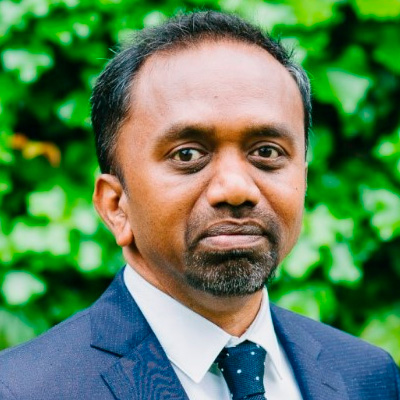
About Fredrick Royan

About Adyasha Mohanty
Senior Industry Analyst, Sustainability and Circular Economy at Frost & Sullivan
Adyasha Mohanty is a Senior Industry Analyst with experience in consulting, market intelligence, and strategic advisory in Sustainability and Circular Economy. Her work spans waste management, sanitation, and climate resilience, supporting corporates, government agencies, multilateral development institutions, and investors with data‑driven insights. She leverages a strong foundation in economics and international development and combines systems thinking with market and strategy analysis to translate complex sustainability challenges into actionable and scalable growth opportunities.
Ready to Lead the Transformation?
- Book a Growth Strategy Session: Align your growth roadmap with Frost & Sullivan’s Visionary Growth Pipeline™ Dialog.
- Engage with Growth Experts: Co-design AI-enabled, data-driven operating models that scale industry-specific and commercial impact.
- Share Your Transformation Story: Position your organization as a transformation leader through Frost & Sullivan’s Transformational Growth Leadership platform.
- Join the Growth Council: Collaborate with industry leaders shaping the future of your ecosystem.
- Nominate for the Best Practices Recognition: Be recognized for excellence in growth strategy, execution, and customer impact.
- Demonstrate Industry Positioning on the Frost Radar™: Benchmark your growth performance and innovation strength against industry competitors.
- Activate Brand & Demand Growth: Accelerate awareness, engagement, and revenue growth through integrated brand and demand generation strategies.
Annexure: Advancing Circularity and Responsible E-Waste Management
As digital adoption accelerates globally, countries are facing increasing pressure to build scalable and environmentally responsible e-waste management ecosystems capable of supporting circular economy objectives.
At the same time, evolving regulations, rising electronic consumption, material recovery opportunities, and sustainability expectations are reshaping how governments, producers, and recyclers approach circularity and resource management.
To support organizations navigating this transformation, Frost & Sullivan provides forward-looking intelligence across circular economy strategies, sustainable recycling, resource recovery, and environmental compliance, including:
📌 Growth Opportunities in India’s Circular Economy of eWaste
📌 Top 10 Growth Opportunities in the Circular Economy Market
Together, these analyses reinforce the central themes explored in this Transformational Growth Leadership discussion: sustainable circularity, infrastructure-led formalization, environmental accountability, operational transparency, and the future evolution of India’s e-waste recycling ecosystem.